
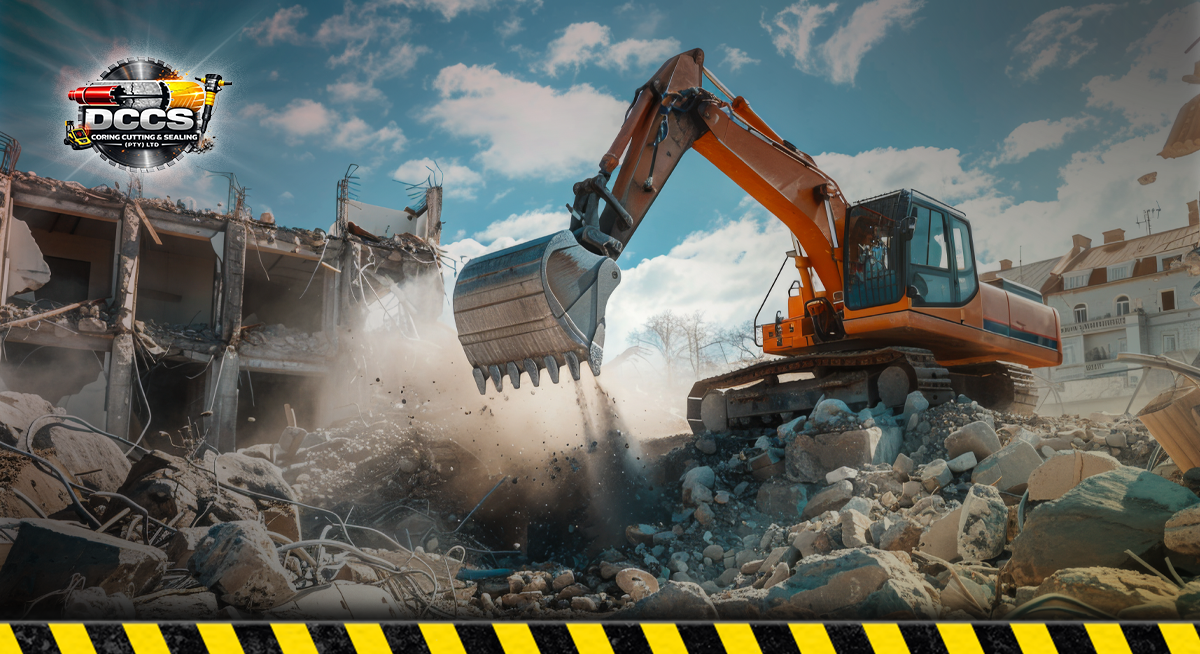
What Affects the Cost of a Demolition Project? | DCCS
Demolition cost factors can vary significantly from one project to another, even when two scopes appear similar on paper.
A small interior strip-out inside an occupied commercial building has different requirements from an open-site concrete breaking project. A controlled demolition scope near live services or sensitive finishes requires a different approach again.
For contractors, QS teams, engineers, procurement professionals, project managers, developers and facilities teams, this makes demolition pricing about far more than the volume of material being removed.
A realistic quote should reflect the full scope, demolition method, access, safety controls, labour, equipment, rubble handling and what must happen before the next trade can begin.
DCCS supports project teams with demolition services including controlled demolition, concrete breaking, interior strip-out, robotic demolition and rubble removal.
The important part is matching the method to the site.
Why Demolition Costs Vary
There is no useful universal rate for every demolition project.
Two concrete slabs with the same approximate area may require very different methods if:
-
One is lightly reinforced and externally accessible
-
The other is heavily reinforced inside a restricted building
-
One can be broken mechanically
-
The other must be removed in controlled sections
-
One has open truck access
-
The other requires rubble to be carried through internal corridors
The apparent quantity of material may be similar.
The practical scope is not.
That is why demolition pricing factors should be assessed as a complete site condition rather than a simple rate per square metre or cubic metre.
1. Project Scope and Size
The first factor is the scope itself.
A contractor needs to understand exactly what must be removed and what must remain untouched.
Useful scope information includes:
-
Area or volume to be demolished
-
Structural or non-structural elements
-
Concrete slabs
-
Beams
-
Columns
-
Walls
-
Foundations
-
Finishes
-
Partitions
-
Services
-
Equipment or fixtures
-
Rubble-removal requirements
The scope should also identify what needs protection.
For example, demolition may happen next to:
-
Existing flooring
-
Glazing
-
Services
-
Waterproofing
-
Equipment
-
Retained structure
-
Occupied spaces
-
Other trades
Clear scope helps the contractor select an appropriate method and gives procurement teams a better basis for comparing quotations.
2. Type of Demolition Required
Different demolition methods have different equipment, labour and planning requirements.
Controlled Demolition
Controlled demolition may be appropriate where removal must be precise, sequenced or carefully managed around retained structures, services or nearby operations.
Concrete Breaking
Concrete breaking may suit applications where impact-based removal can be used safely and efficiently.
Interior Strip-Out
Interior strip-out is commonly used in refurbishment and fit-out preparation, where internal finishes, partitions, ceilings, flooring or selected elements need to be removed without damaging retained areas.
Robotic Demolition
Robotic demolition may be considered where access, operator exposure or site constraints make remote-controlled equipment useful.
The correct method should be chosen around the site and risk profile, not simply around whichever method appears cheapest before work begins.
Poor method selection can create additional labour, rework, programme delay and damage to surrounding work.
3. Concrete Thickness and Reinforcement
Concrete demolition cost is strongly influenced by what is inside the concrete.
A thin, lightly reinforced slab is generally a different demolition task from a thick structural element with dense steel reinforcement.
Important information includes:
-
Concrete thickness
-
Reinforcement density
-
Bar diameter
-
Mesh
-
Structural function
-
Accessibility
-
Whether cutting is required
-
Whether concrete must be removed in sections
Reinforced concrete can require more time because demolition often involves both breaking the concrete and dealing with embedded steel.
The thicker and more heavily reinforced the element, the more important equipment and sequence become.
This is why drawings, scans, engineer information and existing site knowledge can materially improve the accuracy of a quotation.
4. Structural Complexity
Not every element can simply be broken out immediately.
Structural demolition may require a specific sequence to avoid affecting the surrounding building.
This can apply to:
-
Beams
-
Columns
-
Suspended slabs
-
Foundations
-
Retaining structures
-
Load-bearing walls
-
Structural openings
-
Sections adjacent to retained elements
Depending on the project, temporary support or engineer involvement may be required.
A demolition contractor must understand what remains structurally active while removal takes place.
That planning affects programme, equipment, labour and risk.
For this reason, structural complexity should be clarified before mobilisation rather than discovered after demolition begins.
5. Site Access and Working Environment
Access is one of the biggest demolition cost factors.
Open sites generally allow easier equipment movement and rubble handling.
Restricted sites can be very different.
Examples include:
-
Basements
-
Upper floors
-
Narrow corridors
-
Low-clearance areas
-
Restricted doorways
-
Stair access
-
Lift access
-
Confined rooms
-
Operational factories
-
Shopping centres
-
Hospitals
-
Offices
-
Warehouses
Restricted access can limit the size of equipment that can be used.
It may also increase manual handling.
If rubble cannot be loaded directly into a truck or skip, additional movement may be required before material leaves the building.
Operational sites can add another layer of complexity.
Demolition may need to work around:
-
Staff
-
Customers
-
Production
-
Sensitive equipment
-
Public areas
-
Restricted working hours
-
Noise limits
-
Dust controls
-
Vibration concerns
These requirements can affect both productivity and method selection.
6. Equipment, Labour and Safety Controls
Demolition is planned site work, not simply breaking material.
The equipment needed depends on the application.
Possible requirements may include:
-
Hydraulic breakers
-
Concrete saws
-
Compact demolition tools
-
Robotic demolition equipment
-
Material-handling equipment
-
Dust-control equipment
-
Extraction systems
-
Temporary barriers
-
Lifting equipment
-
Cutting support
Labour is influenced by the same site constraints.
More manual work may be required where access is restricted or where materials need to be separated carefully.
Safety controls can include:
-
Exclusion zones
-
Barricading
-
Signage
-
PPE
-
Dust suppression
-
Noise controls
-
Vibration management
-
Protection of live services
-
Protection of retained finishes
-
Controlled work sequencing
These controls should form part of the planned method rather than being treated as extras after mobilisation.
7. Rubble Removal and Site Clearance
Demolition is not finished when the concrete is broken.
The material still needs to be managed.
Rubble removal can affect both programme and price because debris must be:
-
Moved
-
Segregated where required
-
Loaded
-
Transported
-
Cleared from the work area
The difficulty of this process depends on access.
On an open site, machinery may be able to load rubble directly.
Inside a building, debris may need to move through:
-
Corridors
-
Lifts
-
Stairwells
-
Basements
-
Restricted loading areas
Material volume also matters.
Thick reinforced concrete creates heavier waste loads than a light internal strip-out.
Project teams should also define what “complete” means.
Does the demolition contractor only break and remove the structure?
Or must the area be cleared and ready for:
-
Waterproofing
-
Flooring
-
New construction
-
Repairs
-
Services
-
Fit-out
-
Further concrete work
That distinction should be clear in the quote.
8. Programme Constraints and Urgency
Time pressure can affect demolition pricing.
Urgent work may require:
-
Faster mobilisation
-
Additional labour
-
Extended working hours
-
Weekend work
-
Phased work
-
More coordination
-
Additional equipment
An accelerated programme may also reduce the flexibility available for sequencing and logistics.
Where possible, planned demolition is easier to price and manage because the project team can confirm:
-
Scope
-
Drawings
-
Access
-
Work method
-
Safety controls
-
Rubble route
-
Programme
-
Interfaces with other trades
The earlier these items are clarified, the fewer assumptions need to be built into the quotation.
How to Compare Demolition Quotes Properly
A lower price does not automatically mean a better demolition quote.
Before comparing suppliers, make sure the quotations cover the same scope.
Check:
Method
Are both contractors proposing the same demolition approach?
Rubble Removal
Is loading, transport and clearing included?
Protection
Does the quote include protection of adjacent finishes or retained structure?
Safety Controls
Are barriers, dust management and exclusion zones included?
Access
Have both contractors allowed for the same site restrictions?
Working Hours
Are weekend, night or restricted hours included?
Engineering Requirements
Has temporary support or structural sequencing been accounted for where applicable?
Final Condition
Is the area left broken out, cleared, cleaned or ready for follow-on trades?
Without this comparison, one quote may look cheaper simply because it excludes parts of the work.
What Information Helps DCCS Quote Accurately?
A useful demolition enquiry should include as much of the following as possible:
-
Site location
-
Photos
-
Drawings or mark-ups
-
Scope description
-
Dimensions
-
Concrete thickness, if known
-
Reinforcement information, if known
-
Structural information
-
Site-access details
-
Working-hour restrictions
-
Operational constraints
-
Rubble-removal requirements
-
Programme dates
-
Engineer instructions, where applicable
-
Information about retained finishes or structures
The objective is not to expect the client to design the demolition method.
It is to provide enough information for the contractor to understand the problem properly.
Frequently Asked Questions
What is the biggest factor affecting demolition cost?
There is no single factor. Scope, access, demolition method, concrete thickness, reinforcement, safety controls and rubble removal all influence the final price.
Does reinforced concrete cost more to demolish?
It can. Heavier reinforcement may require more breaking, cutting, labour and rubble handling.
Does restricted access increase demolition cost?
Often, yes. Restricted access can reduce equipment options and increase manual handling and site time.
Is rubble removal normally included in demolition pricing?
It depends on the quotation. Project teams should confirm whether breaking, loading, transport and final clearance are included.
Does controlled demolition cost more than standard breaking?
The cost depends on the application. Controlled methods may require additional planning and equipment but can reduce risk where precision is important.
When is robotic demolition useful?
Robotic demolition may be considered in restricted, complex or sensitive environments where remote-operated equipment offers practical advantages.
Can demolition be carried out in operational buildings?
Yes, subject to site conditions and appropriate planning. Noise, dust, vibration, access and work-area isolation may need additional controls.
What should I send DCCS for a demolition quote?
Send photos, drawings, scope notes, dimensions, site access information, programme requirements and any known structural or engineer information.
Plan the Demolition Method Before the Work Starts
Demolition pricing is not only about how much material needs to be removed.
It is about how safely, efficiently and practically that material can be removed from the actual site.
Scope, method, reinforcement, access, equipment, labour, safety, rubble handling and programme all contribute to the final requirement.
DCCS supports project teams with demolition services, controlled demolition, concrete breaking, interior strip-out, robotic demolition and rubble removal.
If you are preparing a demolition scope, the best place to start is with clear project information and the right method.
Contact DCCS to discuss your demolition project and request a practical, scope-based quotation.